
A day measured in glasses, not in good intentions
Cupwell writes out the whole day as a timetable: when to drink, how much, and what to put in the water. Every schedule is fixed to clock times so you can check progress without an app.
2200ml per day — the reference target used across the plans.
One day, 07:00 to 22:00
bars show millilitres scheduled by published plans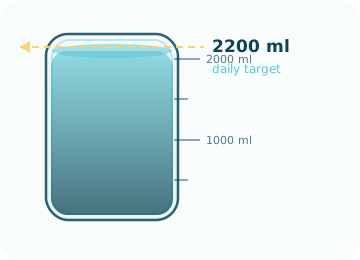 Day plan
Daybreak Hydration Plan: Rebuilding the Overnight Deficit in 90 Minutes
Day plan
Daybreak Hydration Plan: Rebuilding the Overnight Deficit in 90 Minutes
You wake up roughly half a litre behind. This is a fixed nine-mark schedule for 06:40 to 20:30 that closes that deficit before 11:00 and then holds a steady 250 ml rhythm for the rest of the day — no app, no reminders, just times written on a card.
 Infused water
Ginger and Lemon Warm Infusion: 75 °C Water, Eight Minutes, No Thermos
Infused water
Ginger and Lemon Warm Infusion: 75 °C Water, Eight Minutes, No Thermos
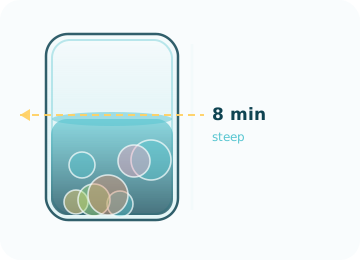
A cold-morning drink built around one number: the water temperature. Ginger at 75 to 80 °C gives a rounded heat that fades in ten minutes; at 100 °C it turns sharp and slightly metallic in half that time. Eight minutes of steeping, lemon added in two stages, and no sealed thermos anywhere in the process.
 Habit anchor
The Morning Tally Bottle: Three Notches Before 08:00
Habit anchor
The Morning Tally Bottle: Three Notches Before 08:00
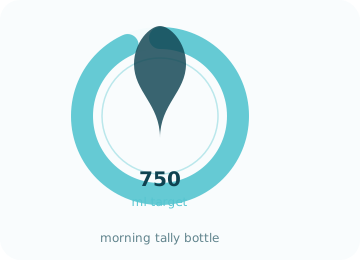
A 750 ml bottle and one rubber band, drunk in three marks before eight in the morning. The band turns an invisible quantity into a visible one, which is the only reason this habit survives past the first week — you can see at a glance whether you are on track without counting anything.
 Infused water
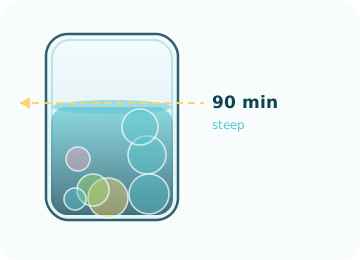
Citrus and Basil Cold Infusion: A 1-Litre Jug for the Morning Block
Infused water
Citrus and Basil Cold Infusion: A 1-Litre Jug for the Morning Block
One orange, one lemon and twelve torn basil leaves in a litre of cold water. Ninety minutes on the counter gives you a drink that tastes of citrus oil rather than juice — bright enough to replace a second coffee, with no sugar and no fizzy water to open.
 Day plan
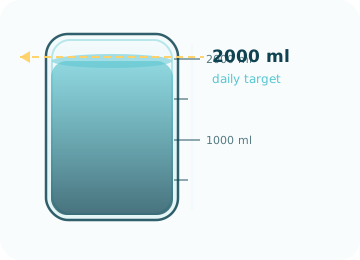
Desk Day Plan: 2000 ml Across Eight Office Hours Without Thinking About It
Day plan
Desk Day Plan: 2000 ml Across Eight Office Hours Without Thinking About It
Offices are the hardest place to drink water: the bottle is always a metre away and always full. This plan fixes a 600 ml bottle plus one mug to eight specific marks between 09:00 and 19:00, so the only decision you make all day is whether to stand up while you drink.
 Habit anchor
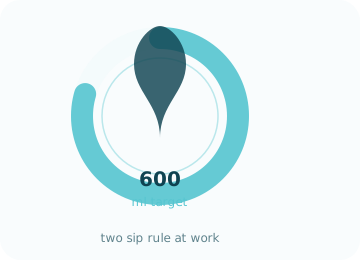
The Two-Sip Rule: Hitching Water to Task Switches Instead of to a Timer
Habit anchor
The Two-Sip Rule: Hitching Water to Task Switches Instead of to a Timer
Timers get dismissed. Task switches do not. The two-sip rule attaches roughly 60 ml of water to five things you already do several times a day, which typically lands 500 to 700 ml without a single reminder — and it costs nothing to try this afternoon.
 Infused water
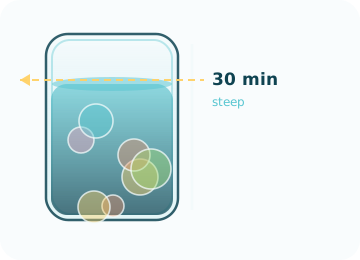
Cucumber, Mint and Lime Jug: The 30-Minute Midday Refill
Infused water
Cucumber, Mint and Lime Jug: The 30-Minute Midday Refill
The fastest of the cold infusions — thirty minutes is enough — and the one built for a hot afternoon. Ribboned cucumber, twenty lightly pressed mint leaves and two limes in 1.5 litres give you three 500 ml servings that taste cold and green rather than sweet.
 Day plan
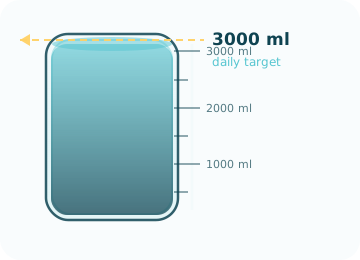
Midday Heat Plan: 3 Litres for Days Above 30 °C
Day plan
Midday Heat Plan: 3 Litres for Days Above 30 °C
A 30 °C-plus day needs roughly a litre more than a mild one, and the extra litre has to arrive in the middle of the day rather than at either end. This plan runs from 11:00 to 20:30, puts 1600 ml into the four hottest hours, and treats salt as a food problem rather than a water problem.
 Infused water
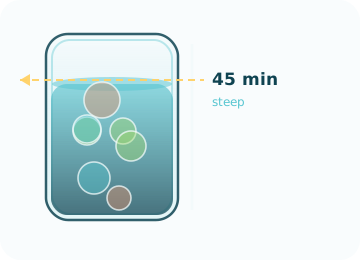
Watermelon and Rosemary Jug: 45 Minutes for a Late-Summer Refill
Infused water
Watermelon and Rosemary Jug: 45 Minutes for a Late-Summer Refill
Watermelon is the only fruit here that adds water rather than only flavour — 300 g of cubes release roughly 270 ml of juice into the jug as it steeps. Two sprigs of rosemary and half a lime keep it from tasting like diluted melon, and 45 minutes is the entire steep.
 Infused water
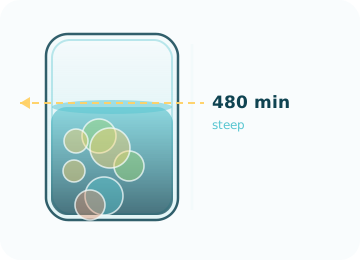
Berry and Hibiscus Cold Brew: Eight Hours in the Fridge, One Litre of Deep Red
Infused water
Berry and Hibiscus Cold Brew: Eight Hours in the Fridge, One Litre of Deep Red
The only infusion in this set that is made entirely in the fridge. Fifteen grams of whole hibiscus petals and 150 g of frozen berries left for eight hours give a tart, dark red litre that keeps for two days and needs no sugar to be drinkable.
 Day plan
Training Day Plan: When to Drink Around a 90-Minute Session
Day plan
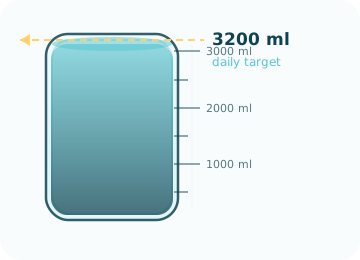
Training Day Plan: When to Drink Around a 90-Minute Session
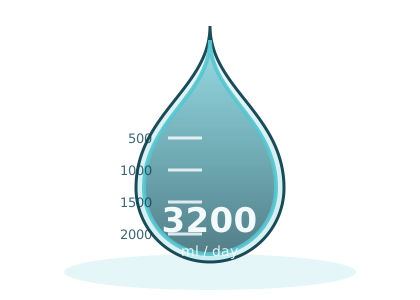
Drinking during a workout is the part everybody remembers and the part that matters least. This plan puts 900 ml in the four hours before the session, 700 ml across it in 20-minute doses, and 1200 ml in the evening — 3200 ml in total, timed so that nothing sits in the stomach when it matters.
 Habit anchor
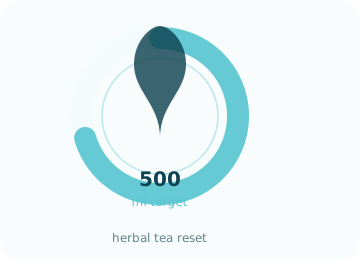
The 15:00 Herbal Swap: Replacing the Third Coffee Without Losing the Break
Habit anchor
The 15:00 Herbal Swap: Replacing the Third Coffee Without Losing the Break
The afternoon coffee is rarely about caffeine — it is about leaving the desk. This habit keeps the break and changes the drink: a 250 ml mug of rooibos or peppermint at 15:00 and a second cup at 16:30, which adds 500 ml of fluid to the hardest part of the day at no behavioural cost.
 Day plan
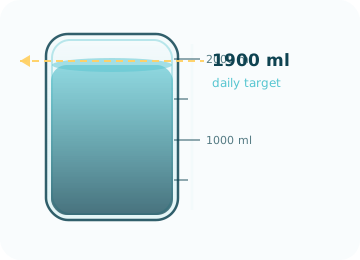
Evening Wind-Down Plan: Tapering Fluid So You Do Not Wake at 03:00
Day plan
Evening Wind-Down Plan: Tapering Fluid So You Do Not Wake at 03:00
Most hydration plans say nothing about the last four hours of the day, which is why they produce people who hit their target and still sleep badly. This plan front-loads the volume and tapers from 300 ml at 17:00 down to a 100 ml sip at 21:30, arriving at a 1900 ml total mostly before dinner.
 Infused water
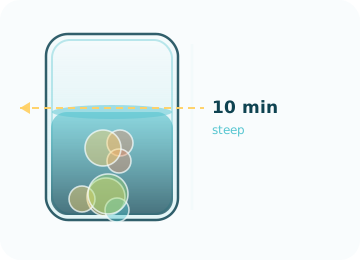
Apple and Cinnamon Warm Jar: A Caffeine-Free Evening Drink
Infused water
Apple and Cinnamon Warm Jar: A Caffeine-Free Evening Drink
Nine hundred millilitres of warm, lightly spiced apple water for the last two hours of the day — no caffeine, no alcohol, and no sugar unless the apples need it. Ten minutes of steeping at 80 to 85 °C, one cinnamon stick, and a strip of lemon peel to stop it tasting flat.